How To Write A Script In Each Genre - Explained Simply - Part 2
Write these five genres by connecting their external situations to a specific human struggle.
By My Logline Editorial
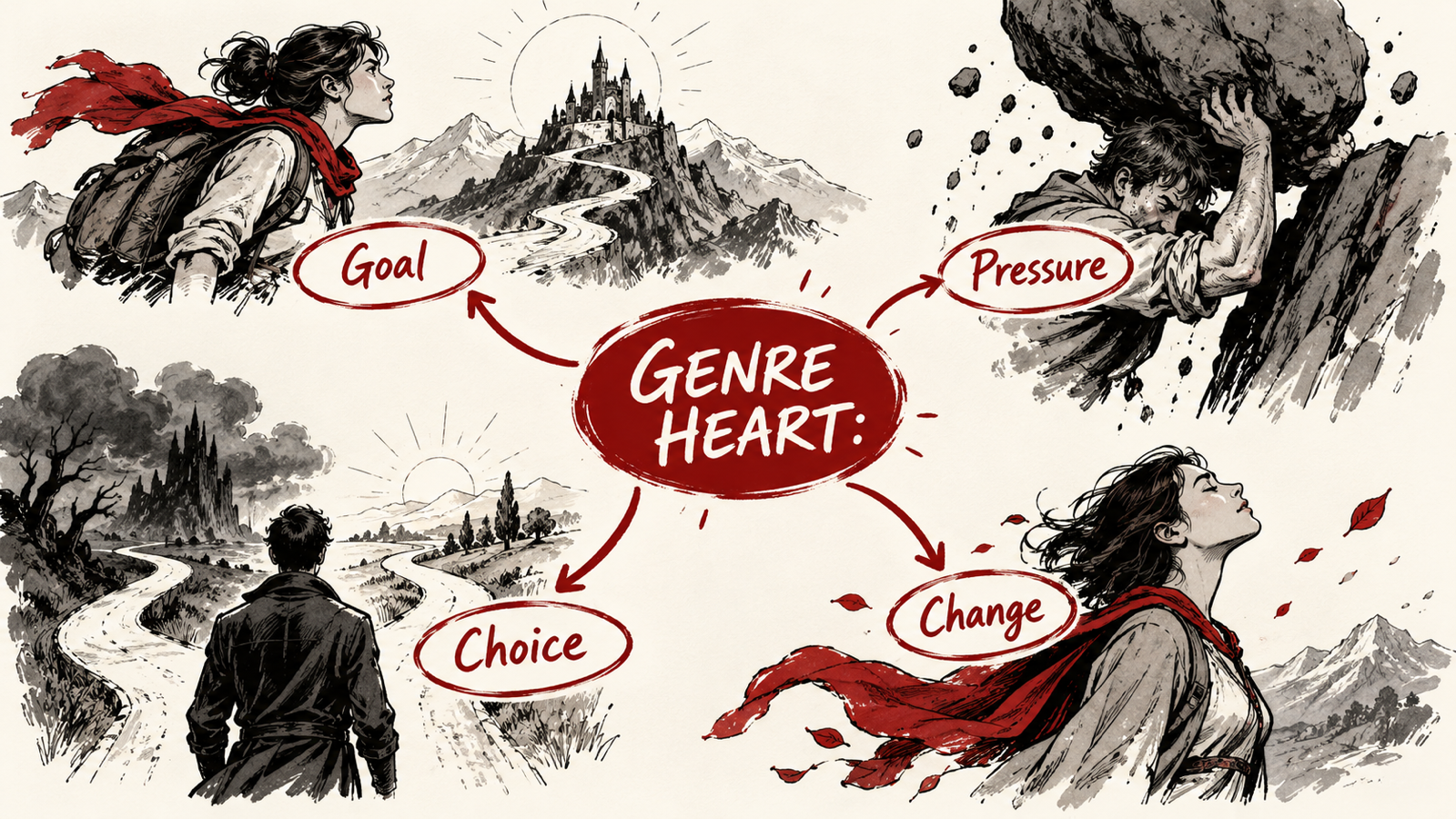
Write these five genres by connecting their external situations to a specific human struggle. A sports goal, extraordinary power, growing up, a real life, or a survival threat gives the story its shape; character choices give it meaning. Research the world, establish limits, and build an ending that reveals meaningful change.
A genre gives your story a direction, while the protagonist gives the audience a personal reason to follow it. This second set of frameworks applies that principle to sports, superhero, coming-of-age, biographical, and survival films. Begin with the human conflict and build the genre around it.
Sports film: find the story beyond the score
Ask what the sport means to the protagonist: identity, recognition, a second chance, freedom, or belonging. Research the game’s rules, training, language, and environment. Create a clear sporting goal and meaningful pressure from opponents, the protagonist’s doubts, or wider circumstances.

Give coaches, teammates, rivals, and family members distinct roles. Show training, setbacks, injuries, sacrifices, and moments away from competition. The final match needs to resolve something emotionally, even if the result is a loss. 15 Storytelling Tricks Every Director Must Learn helps connect the sporting objective to the character’s change.
Superhero film: connect power to responsibility
Choose a distinctive premise and a protagonist with ordinary needs, fears, and contradictions. Establish the origin or setup without letting it consume the whole story. Define the powers and their limits, the society around them, and the cost of using them.
Create an antagonist whose beliefs challenge the hero’s values. Build conflicts that require choices as well as physical action. Explore questions of identity, justice, freedom, or responsibility through the plot. Let the climax resolve the central struggle while leaving the character changed.
Coming-of-age film: show a new understanding
Begin at a turning point in a young person’s life. Give them a particular place, period, family situation, and social world. Use friendships, mentors, family relationships, or first love to reveal what they believe and what challenges those beliefs.
Focus on meaningful experiences and small changes in perception. Use the character’s language, humour, awkwardness, and uncertainty. A satisfying ending may offer acceptance or clarity rather than a perfect future. Explaining Screenwriting Concepts In Simple Terms - Part 2 is useful for the subtext and relationship conflict inside those apparently ordinary moments.
Biopic: choose the dramatic thread
Research the person through credible records and multiple perspectives. Identify the period, relationship, conflict, or question that can carry a film. You cannot give every life event equal weight. A clear dramatic focus helps you decide what belongs.
Show ambition, doubt, failure, relationships, and growth. Distinguish documented facts from interpretation or dramatisation, and use appropriate professional review where the material requires it. Build a structure around meaningful change while keeping the person recognisably human. How To Write A Full Screenplay From An Idea gives you a process for turning that researched material into a treatment and draft.

Survival film: make every option matter
Place a relatable protagonist in a harsh, specific environment. Research its practical details and establish the resources, skills, threats, and limits. Create immediate goals such as finding shelter, reaching help, or conserving supplies. Increase pressure through changing conditions and the consequences of earlier choices.
Balance physical survival with fear, guilt, hope, or responsibility. Give the climax a decisive action that grows out of the journey. How To Write A Thriller - Writing Framework offers additional ways to control danger and information. When the ordeal ends, show what surviving has changed in the character.
Frequently asked questions
How do I choose which period of a real person’s life to dramatise?
Choose the period or conflict that supports the film’s central dramatic question. Research it from credible sources and distinguish documented events from interpretation or dramatisation.
Does a sports film need the protagonist to win?
No. A loss can resolve a meaningful character journey. The final contest needs to pay off the emotional and dramatic questions established earlier.
Use My Logline to write your film.