How To Write A Full Screenplay From An Idea
Write a screenplay by testing an idea, developing its possibilities, outlining the story, building the characters, and writing a treatment before the first draft.
By My Logline Editorial
Write a screenplay by testing an idea, developing its possibilities, outlining the story, building the characters, and writing a treatment before the first draft. Revise the complete story before polishing individual lines, then check the document and share it with a purpose. This nine-step process turns a large project into concrete decisions.
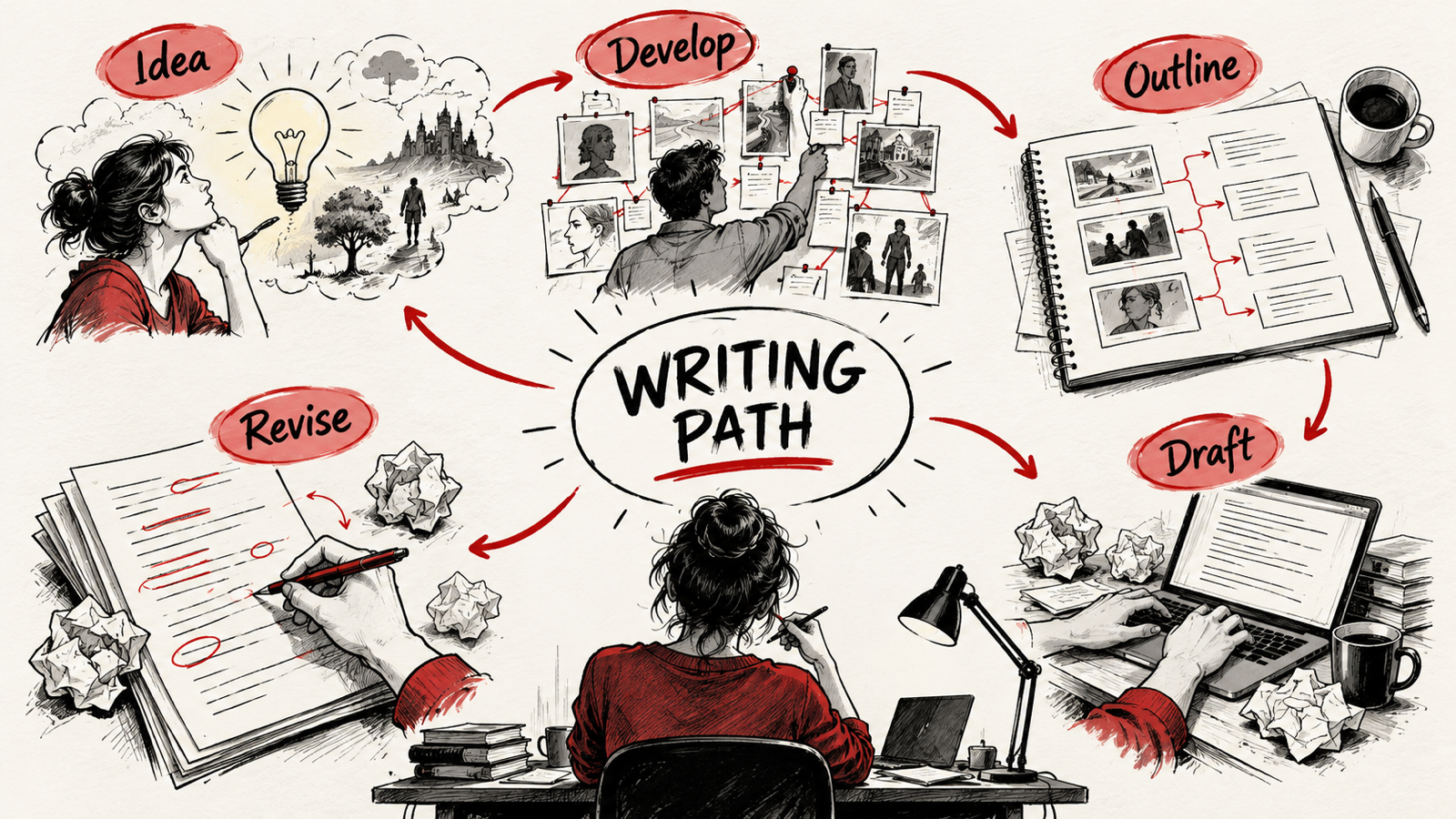
A screenplay grows through a series of manageable stages. You begin with an idea, discover what is inside it, organise that material, and write scenes that can be performed and filmed. The process moves from idea and development through outline, characters, treatment, first draft, revision, finalisation, and sharing.
1. Find and test the idea
Start with a character, question, situation, place, memory, or “what if?” Keep the first version simple. Who is affected? What changes? What makes the situation worth exploring? Turn it into a working logline. Avoid trying to explain the whole film in the first sentence.
2. Develop the possibilities
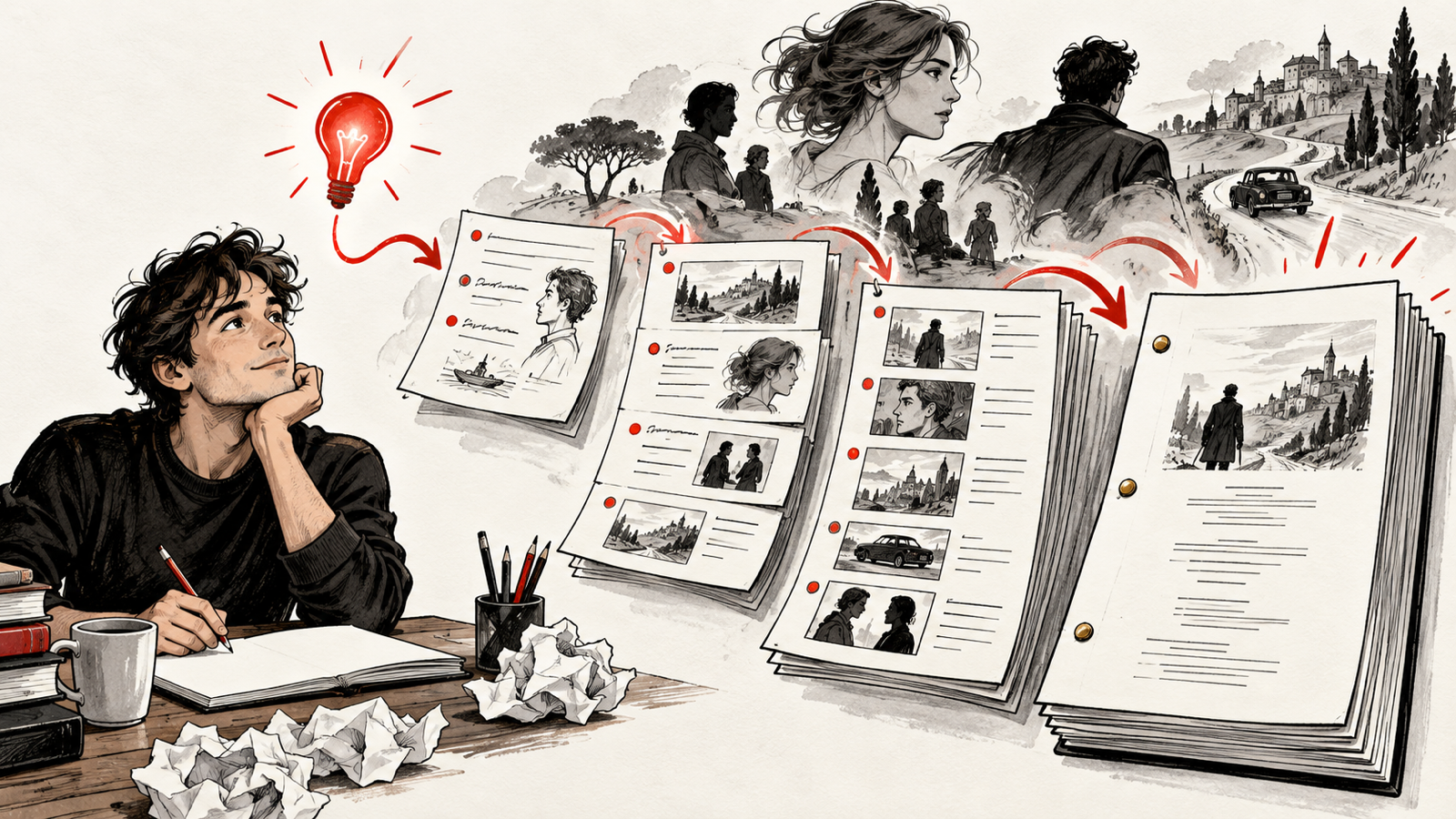
Expand the idea into a short paragraph. Explore the theme, possible conflicts, setting, and consequences. Ask what makes your version distinctive. Try several directions before choosing one that gives you a strong character journey and enough dramatic possibilities.
3. Create an outline
List the opening, inciting incident, major turning points, midpoint, emotional low point, climax, and resolution. Choose a structure that clarifies your story. Explaining Screenwriting Concepts In Simple Terms explains several frameworks you can use. Check cause and effect: one event or choice should create the pressure for the next.
4. Build the characters
Give the protagonist a goal, fear, flaw, strength, and reason to act now. Develop an opposing force with its own motivation. Make supporting characters distinct through their wants, relationships, and behaviour. Ask how the protagonist changes and which choices make that change visible.
5. Write a treatment
Describe the film in prose, in present tense, from beginning to end. Include the important actions, emotional shifts, and consequences. Keep the treatment clear enough for someone else to follow without you explaining it. This lets you inspect the whole film before investing in every line of dialogue.
6. Write the first draft
Prepare your tools, use screenplay format, and work scene by scene. Each scene needs a purpose: a change in information, relationship, situation, or decision. Write actions we can see and dialogue the characters would say. Allow imperfect pages so you can reach an ending. How To Finish Your Script In 14 Days turns the work into daily stages if you need a defined schedule.
7. Revise and polish
Take a break before rereading. Inspect the whole story first: goal, conflict, pacing, character growth, and ending. Then revise individual scenes, dialogue, transitions, and visual storytelling. Remove repeated information and make important setups and payoffs clearer. Read dialogue aloud and seek feedback from people who can explain where they became confused or disengaged.

8. Finalise the document
Check continuity, formatting, names, headings, spelling, and readability. Make the final revisions that improve the film rather than revising endlessly without a purpose. Save a clearly named version and prepare the supporting logline and synopsis.
9. Share with a purpose
Choose appropriate readers, collaborators, contests, or producers and follow their submission requirements. Record what you send and which version they receive. When presenting the work, use 20 Ways To Impress Your Producer to explain its core journey clearly and leave space for questions.
Frequently asked questions
Do I have to write a treatment before a screenplay?
A treatment is useful for testing the whole film in prose, but writers use different workflows. The important outcome is a clear understanding of the journey before committing to detailed scenes.
What should I revise first after finishing a draft?
Review the protagonist’s goal, central conflict, turning points, emotional logic, and ending. Fix those larger issues before spending most of the revision time on isolated lines.
Use My Logline to write your film.