How To Write A Script In Each Genre - Explained Simply
Develop a genre screenplay by identifying the audience experience, researching the world, and giving characters goals that generate conflict.
By My Logline Editorial
Develop a genre screenplay by identifying the audience experience, researching the world, and giving characters goals that generate conflict. Rom-com, thriller, action, drama, horror, science fiction, and buddy comedy emphasise different kinds of pressure and payoff. Use the genre promise to shape scenes while preserving coherent character choices.
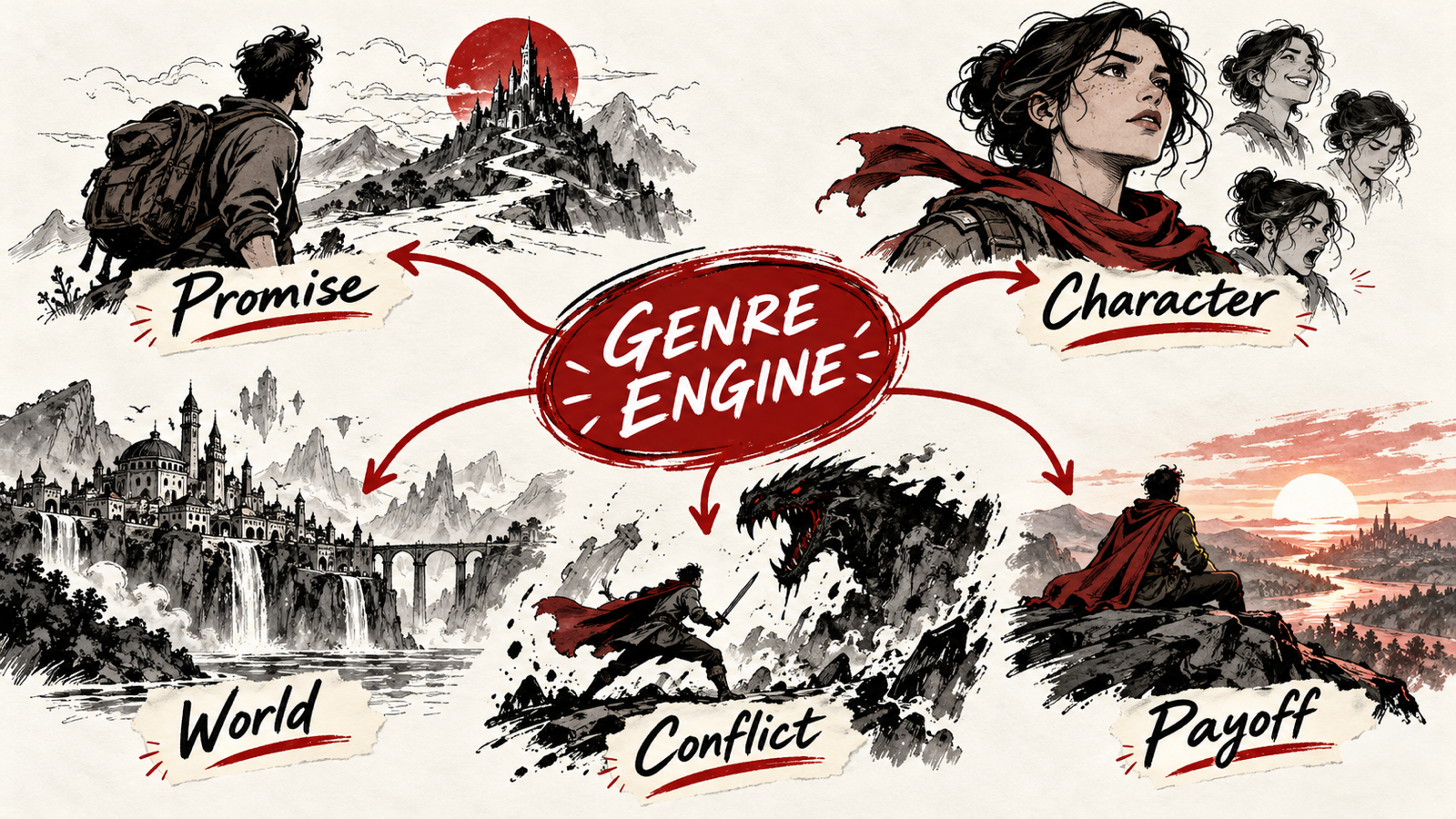
Genres help you understand the experience an audience expects. Start with a clear idea, research its world, create people with compelling wants, and build a sequence of choices and consequences. Then shape the emphasis to suit the kind of film you are writing.
Rom-com: make the relationship move
Begin with a relatable situation and two leads whose personalities or goals create friction. Build their world, meeting, growing attraction, complications, separation or low point, and earned reunion. Use banter, misunderstandings, and small emotional moments without losing the people underneath the jokes. How To Write A Rom-Com - Writing Framework develops this relationship framework in more detail. Read the dialogue aloud and check that the romance genuinely progresses.
Thriller: control tension and information
Start with a troubling question, secret, or danger. Research the relevant setting and procedures, then give the protagonist a personal reason to keep going. Use an inciting incident, investigation or pursuit, discoveries, setbacks, and a climax that answers the central question. Plant clues fairly and make each twist change the situation. How To Write A Thriller - Writing Framework focuses on the information gaps and misdirection that sustain suspense.
Action: let the conflict shape the set pieces
Give the protagonist a clear mission and an opposing force capable of resisting it. Research the skills, tactics, technology, or physical limits your sequences depend on. Escalate the danger and make the action alter the story. Geography and cause and effect should remain understandable. Rewrite repetitive confrontations and preserve the character’s emotional reason to fight.
Drama: build pressure around human choices
Choose an emotional question, develop layered characters, and create a believable social world. Conflict can arise from family, work, identity, ambition, or a difficult relationship. Use scenes that reveal contradictions through action and subtext. Let the ending grow out of choices made under pressure. How To Write A Family Drama - Writing Framework is a useful example of turning relationships into a dramatic structure.
Horror: develop the fear and its rules
Decide what the audience fears and why the protagonist is vulnerable to it. Build atmosphere through setting, sound, uncertainty, and limitations. Establish enough rules for the danger to feel coherent. Escalate from disturbance to confrontation, balancing anticipation with moments of release. Research the folklore or other material you use and avoid substituting repeated jump scares for development.
Science fiction: connect the big idea to people
Ask a “what if?” question, then research the scientific or speculative foundation. Define the world’s rules, limits, and consequences. Create a protagonist whose personal struggle makes the idea emotionally meaningful. Reveal the world through action, and keep the story’s rules consistent when the plot becomes difficult.
Buddy comedy: make the pair need each other
Give the central duo a shared problem and contrasting methods. Create opportunities for friction, mutual dependence, and growing friendship. Raise the stakes, let jokes emerge from personality, and give the relationship an emotional payoff. Keep both characters active in solving the problem.
Revise for the genre promise
Read the draft for clarity, pacing, character growth, and the experience you promised. Seek specific feedback, tighten repeated scenes, and prepare a clear logline and synopsis. How To Write A Script In Each Genre - Explained Simply - Part 2 continues this approach with sports, superhero, coming-of-age, biographical, and survival films.
Frequently asked questions
Can one film combine more than one genre?
Yes. Decide which experience leads and how the other genre supports it. A romantic comedy can contain suspense, but its main relationship still needs a satisfying dramatic journey.
Should I follow genre conventions exactly?
Understand the conventions so you can use or change them deliberately. A familiar device works best when it grows out of the particular characters, world, and conflict.
Use My Logline to write your film.