How To Write A Rom-Com - Writing Framework
A romantic comedy develops attraction through a real clash of desires, contrasting personalities, playful situations, and small moments of connection.
By My Logline Editorial
A romantic comedy develops attraction through a real clash of desires, contrasting personalities, playful situations, and small moments of connection. Build a meeting that creates consequences, let emotional truth challenge the relationship, and earn the ending through changed choices. Each scene should develop emotion, playfulness, or the relationship’s direction.
A rom-com begins with two people whose attraction meets a real obstacle. The comedy grows from how they handle that friction, and the romance grows from what they gradually see in each other. Build the relationship through choices and small observations the audience can recognise.

1. Define the core conflict
Ask what each person wants from life and why those desires clash. One might value stability while the other wants freedom or a move to another city. Make both desires understandable. Consider past love versus present stability and assumptions versus understanding as examples of relationship conflict. Write your own conflict in a sentence you can use to evaluate every major scene.
2. Give the leads contrasting personalities
Imagine pairing a laid-back character with a focused, ambitious one. Explore how such differences affect behaviour, humour, fear, and expectations. Give both people strengths and limitations. Their contrasting habits should create situations, while the relationship gradually reveals what each person needs to learn.
3. Create a meeting that starts something
Consider embarrassment, mistaken identity, a shared problem, or forced proximity as possible starting situations. Choose one that belongs to your characters’ world. A meeting becomes useful when it creates a reason for the next encounter and reveals something about both people.
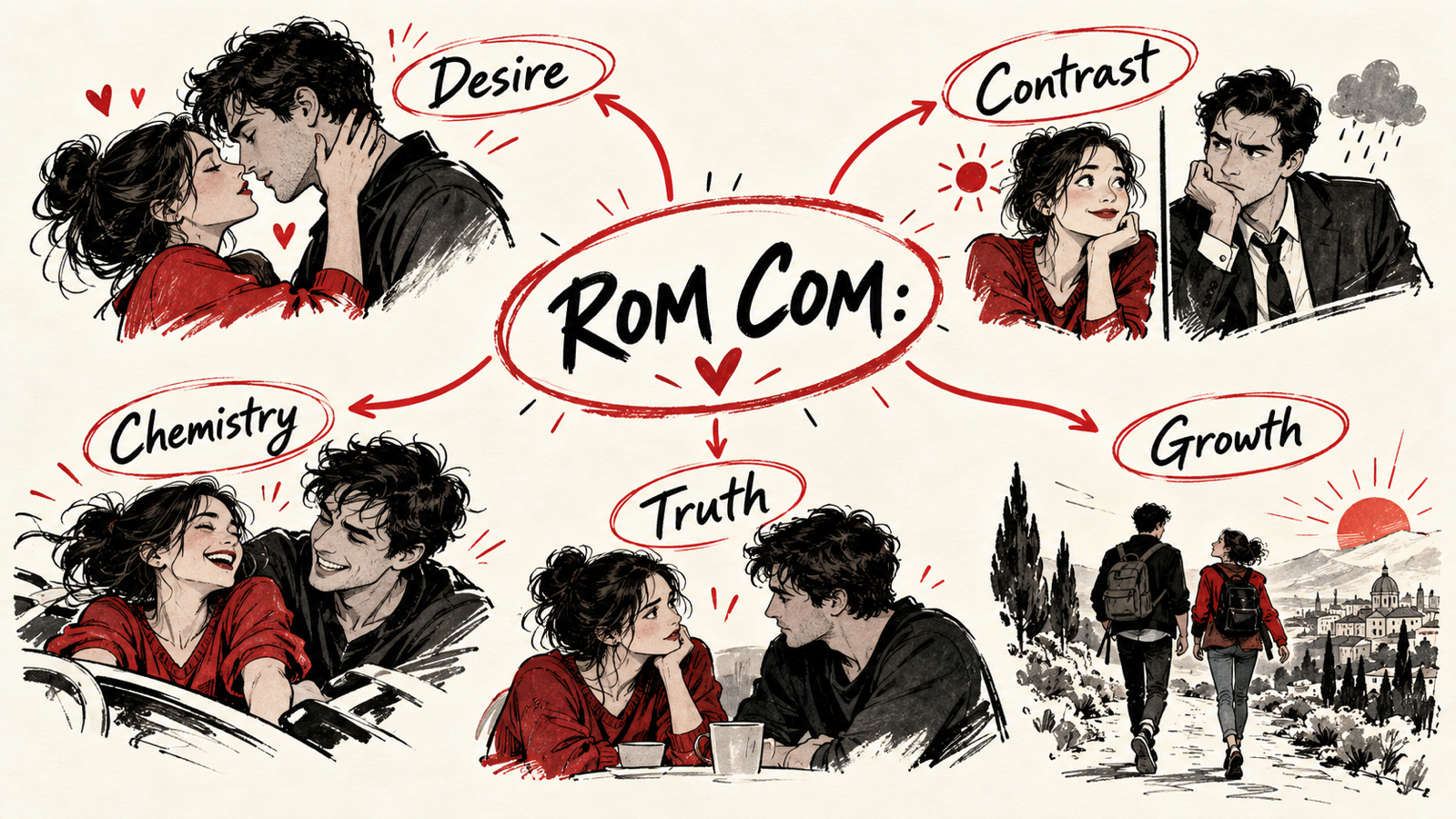
4. Build chemistry through small moments
Let one character notice a habit the other thought nobody saw. Use shared vulnerability, playful disagreement, help offered without an announcement, or a silence that becomes comfortable. A song or montage can support the relationship, but the scenes need to show why these two people matter to each other. Explaining Screenwriting Concepts In Simple Terms - Part 2 explains how subtext and behaviour carry feelings the characters have not yet admitted.
5. Make the emotional truth difficult
Bring the underlying conflict into the open. One person may finally speak honestly while the other is not ready to respond. That creates distance with a clear emotional cause. If family expectations are part of the obstacle, use How To Write A Family Drama - Writing Framework to give the people around the couple their own wants and fears.

6. Earn the reunion through change
Let the leads make a new choice that addresses the conflict. An apology can be part of that moment, but show the behaviour that makes it believable. Each person should understand something they previously avoided. The ending gains force when the relationship’s earlier details return with a changed meaning.
A scene check you can use throughout
Ask three questions: What emotion does the scene create? Where is the playfulness or situational humour? How does the relationship move forward or backward? Revise scenes that simply repeat the same misunderstanding. How To Write A Script In Each Genre - Explained Simply places the rom-com process beside other genres and shows how the emotional promise changes the outline. Keep affection, warmth, and hope connected to the specific people you have written.
Frequently asked questions
What makes a rom-com conflict strong enough for a film?
The obstacle should affect what both people value and require meaningful choices. A misunderstanding may start the conflict, but the relationship gains depth when desires, fears, or expectations sustain it.
How do I show chemistry without long romantic speeches?
Use attention, shared humour, small acts of care, comfortable or awkward silence, and moments of vulnerability. Let the audience see why these particular people matter to each other.
Use My Logline to write your film.