Basics Of Cinematography Explained In Simple Terms
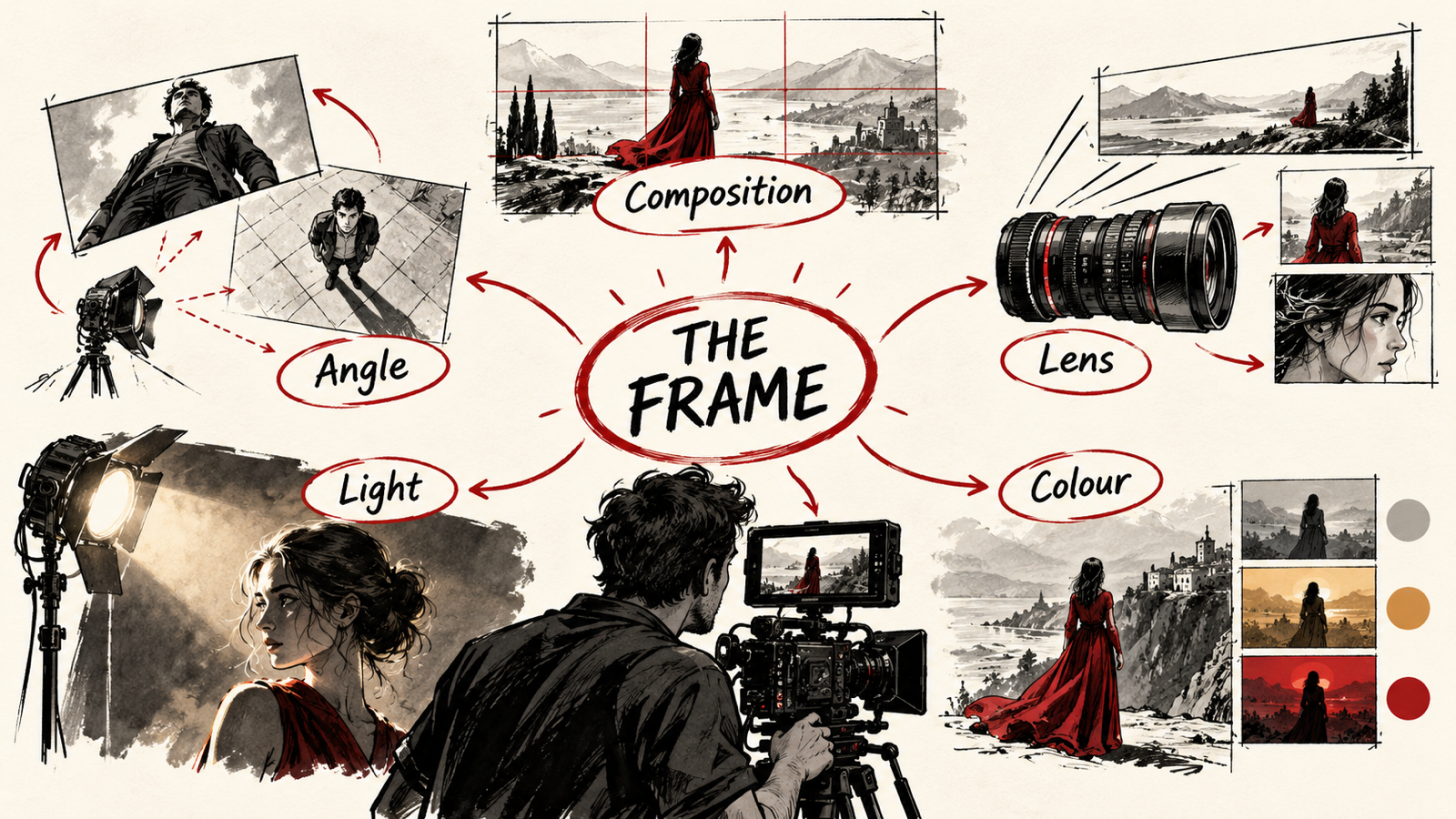
Cinematography shapes a film’s visual meaning through composition, camera angle, movement, lighting, lens choice, and colour.
By My Logline Editorial
Cinematography shapes a film’s visual meaning through composition, camera angle, movement, lighting, lens choice, and colour. Begin with what the scene should communicate, then choose the tools that direct attention toward it. A purposeful frame makes the audience notice the right information and experience the intended relationship or emotion.
Cinematography gives your story a visual form. A conversation can feel intimate, threatening, or lonely depending on framing, camera position, movement, light, lens, and colour. Begin by deciding what the audience should notice and feel in the scene.
1. Compose the shot with a purpose
Framing means choosing what enters the image and what stays outside it. A doorway can frame a character; an empty space can make their isolation visible. Use the rule of thirds as a starting point, placing important elements along the grid lines or intersections. Leading lines, shapes, symmetry, and deliberate imbalance guide attention.
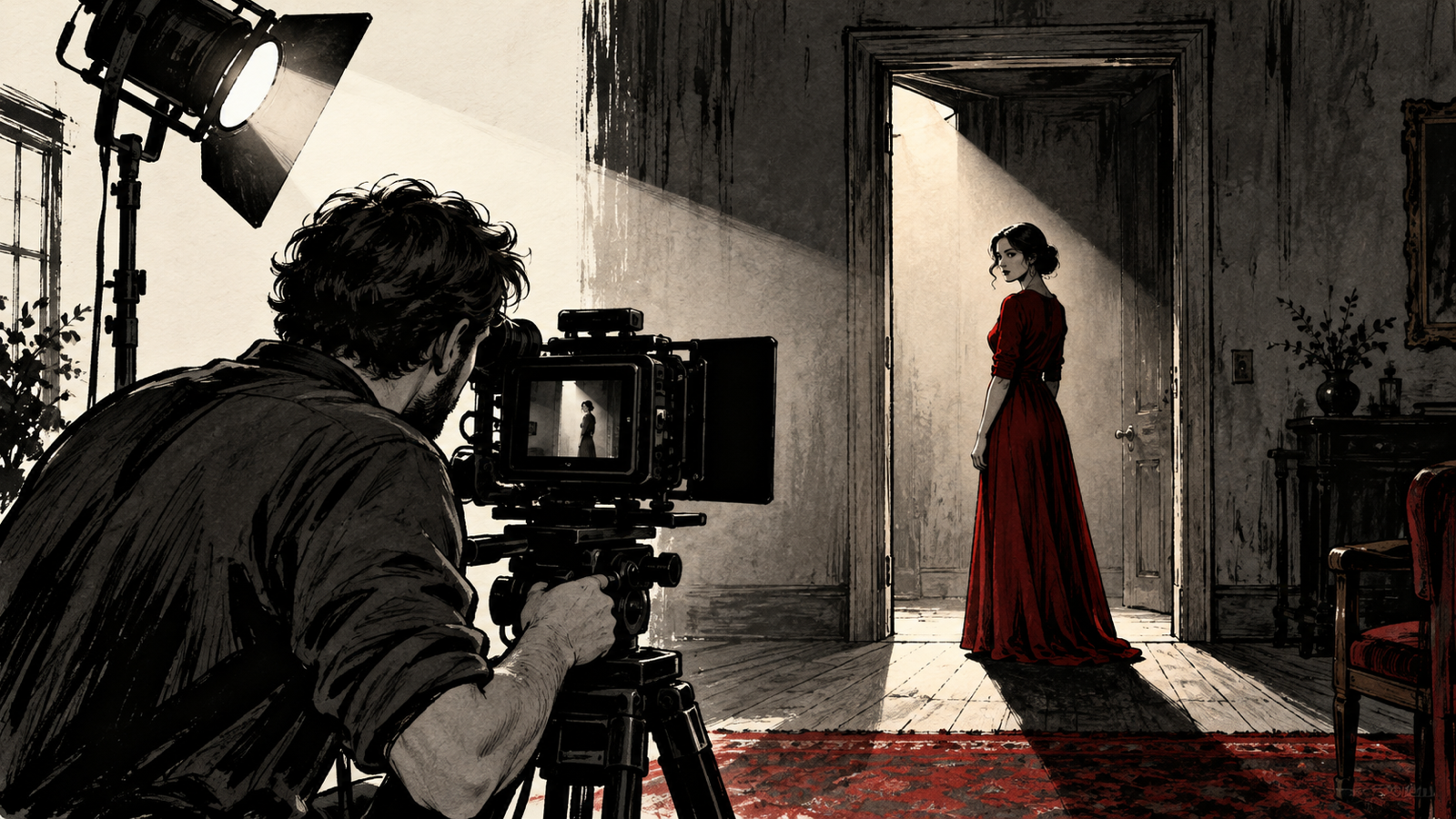
Choose a shot size for the information you need. An extreme wide shot establishes scale, a wide shot shows a body in its surroundings, a medium shot supports interaction, and a close-up brings us toward emotion or detail. Leave appropriate headroom and looking room. For more options, 50 Shot Types Every Director Must Master connects these choices to practical scene coverage.
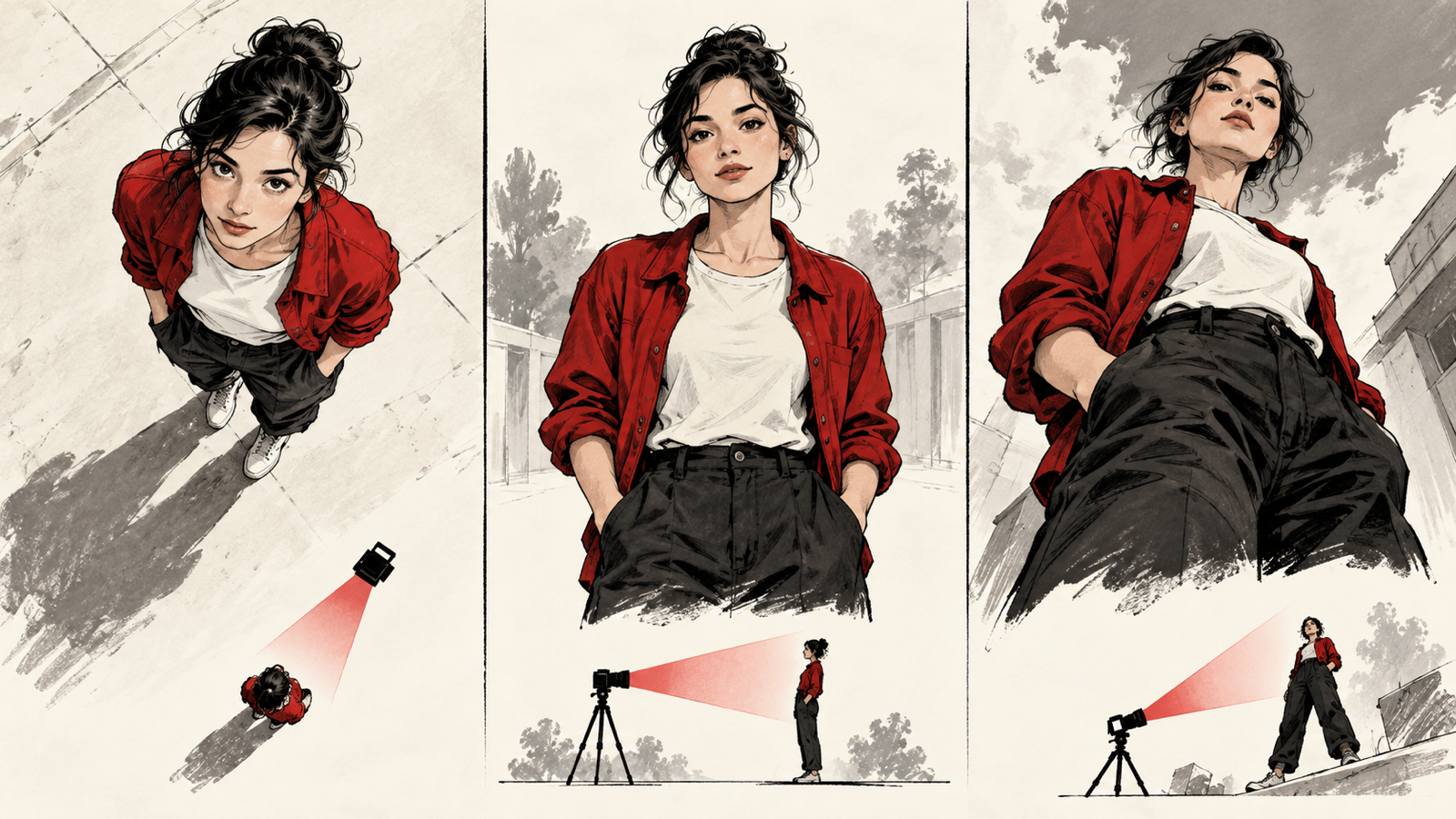
2. Change the camera angle, change the impression
Eye level often feels neutral. A high angle can make a character appear exposed, while a low angle can suggest power. A bird’s-eye view reveals spatial relationships; a worm’s-eye view exaggerates height. An over-the-shoulder shot establishes a relationship, and a point-of-view shot shares a character’s viewpoint. A Dutch angle can unsettle the frame. These are tools whose effect depends on context.
3. Give camera movement a reason
A pan turns horizontally and a tilt turns vertically. A dolly physically moves toward or away from the subject; tracking follows action. A pedestal changes camera height, an arc moves around the subject, and a crane explores vertical space. Stabilised movement can feel fluid; handheld movement can feel immediate or unstable. A zoom changes focal length from a fixed position. Move because something in the scene changes.
4. Shape the light
Natural light comes from available sources such as daylight. Three-point lighting uses key, fill, and back light to shape a subject. Low-key lighting favours shadow and contrast; high-key lighting produces a more evenly lit image. Practical lights appear within the scene, while motivated lighting appears to come from a believable source. Hard light creates defined shadows; soft light makes gentler transitions. Coloured light and silhouettes can add mood when they serve the scene.
5. Choose lenses for perspective and distance
You can group lenses into ultra wide, wide, normal, short telephoto, and telephoto. Wider lenses can reveal more of the environment; longer lenses can isolate details. Camera distance also changes perspective, so test the lens and position together. Pick the relationship between subject and background that supports the emotion.
6. Use colour as part of the story
Warm or cool palettes, contrast, recurring colours, and changes in palette can direct attention and suggest mood. Their meaning depends on the world and characters. Connect those visual choices to the underlying dramatic beat using 15 Storytelling Tricks Every Director Must Learn.
7. Build and refine the final frame
Choose a subject, identify the scene’s intention, add depth, consider angle and height, and shape the light. Check props, background, costume, and the edges of the frame. Experiment, compare versions, and keep the one that best expresses the moment. Basics Of Cinema Explained In Simple Terms places these image decisions alongside sound, editing, and performance so the whole scene works together.
Frequently asked questions
How do I choose a camera angle?
Choose the viewpoint that supports the scene’s relationship and information. A high or low angle can suggest vulnerability or power, but its effect depends on performance, context, and the surrounding shots.
Does a longer lens automatically create better images?
No. Lens choice, camera distance, framing, lighting, and the background work together. Choose the combination that serves the scene rather than treating one focal length as universally cinematic.
Use My Logline to write your film.