50 Shot Types Every Director Must Master
Choose a camera shot by deciding what the audience needs to see and feel.
By My Logline Editorial
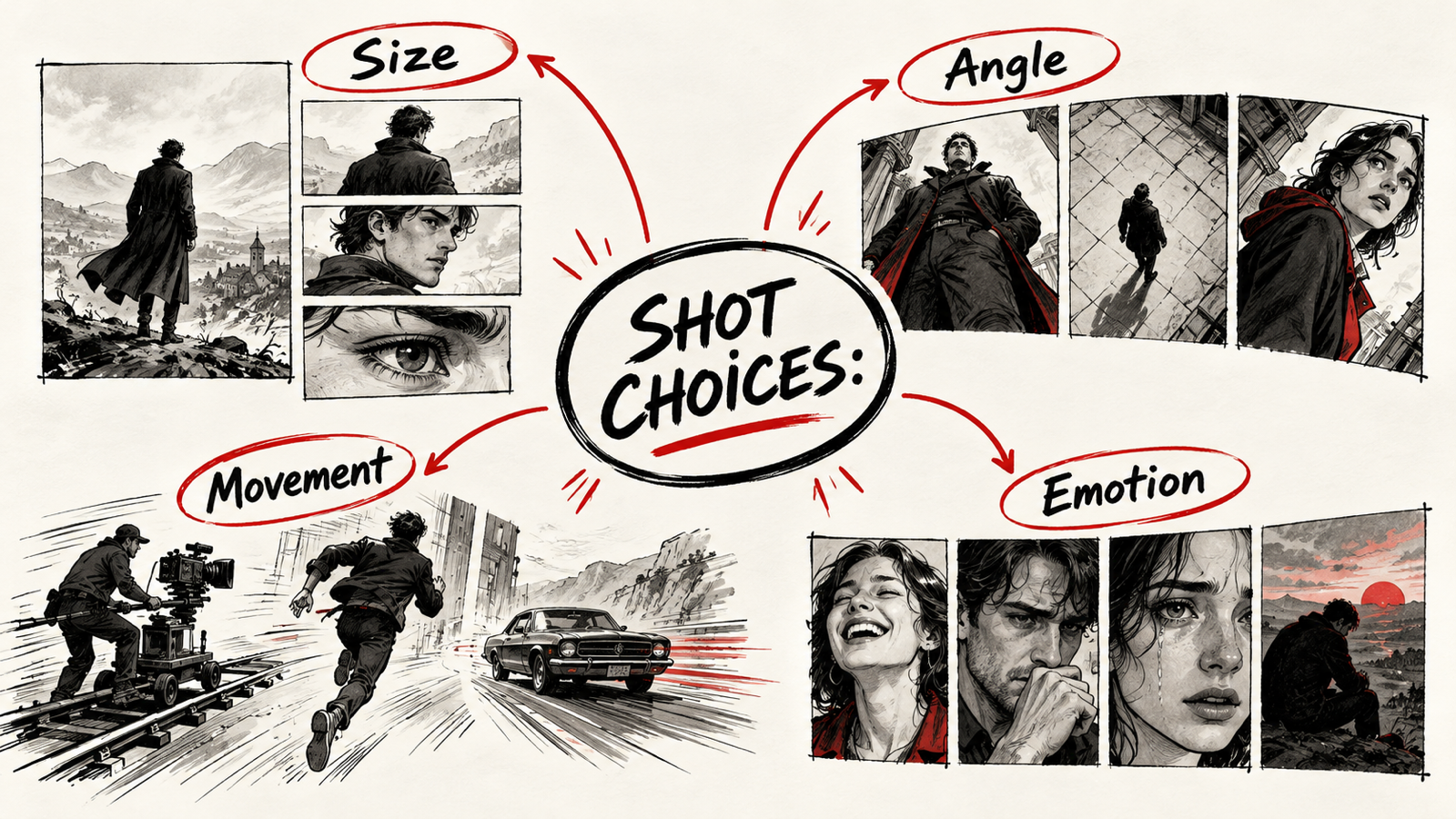
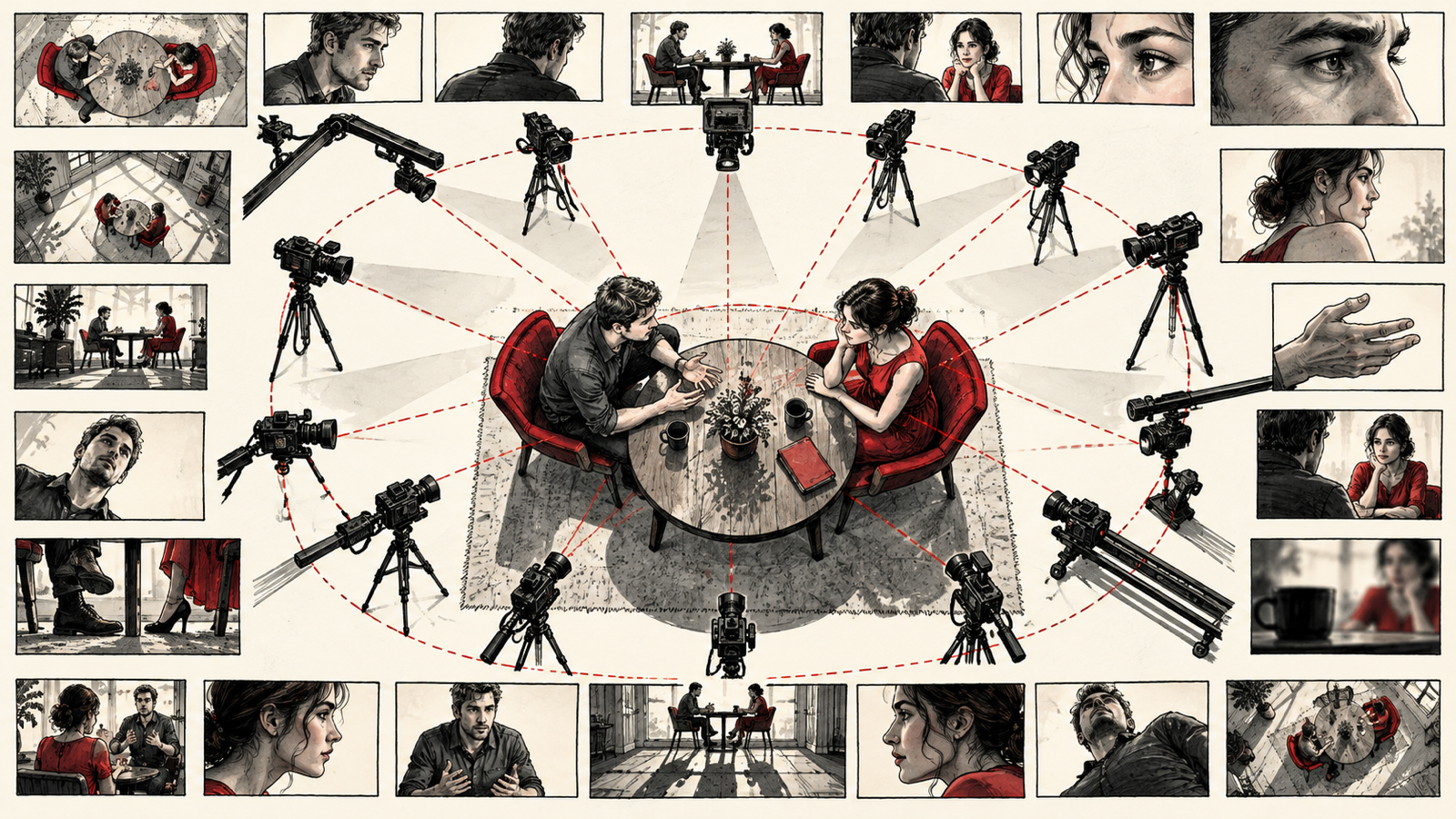
Choose a camera shot by deciding what the audience needs to see and feel. Shot size controls detail, angle shapes viewpoint, and movement changes how we experience action. This guide explains 50 shot types and related techniques, including framing, camera movement, focus changes, and several editing devices commonly discussed during shot planning.
50 Shot Types Every Director Must Master 🎬
-
Wide Shot (WS)
Shows the full subject and surroundings. Great for introducing location and scale.
-
Extreme Wide Shot (EWS)
Shows a very large area. Used for landscapes, cities, or making a character look small.
-
Long Shot (LS)
Shows the full body of the character with some background. Good for movement scenes.
-
Medium Long Shot (MLS)
Frames the character from knees up. A balance between emotion and body language.
-
Medium Shot (MS)
Frames from waist up. Common for conversations.
-
Medium Close-Up (MCU)
Frames chest up. Good for emotions while keeping some body movement.
-
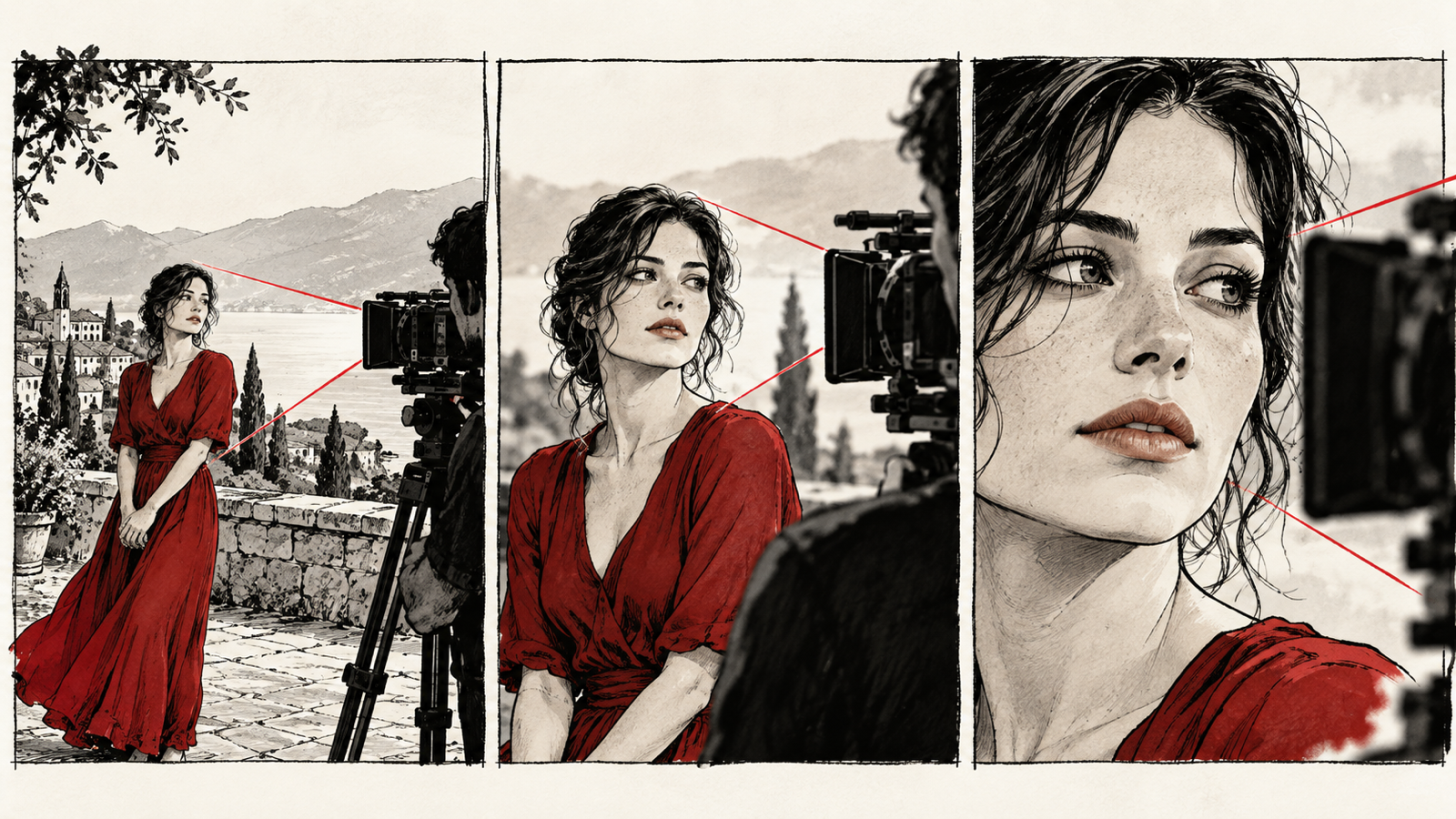
Close-Up (CU)
Focuses on the face or object. Used for strong emotion or important details.
Choose that close-up because the story needs us to notice something. The visual storytelling and emotional buildup principles in 15 Storytelling Tricks Every Director Must Learn help you decide whose feeling or discovery the frame should reveal.
-
Extreme Close-Up (ECU)
Shows only eyes, lips, hand, or tiny detail. Creates intensity and focus.
-
Two Shot
Frames two people together. Great for chemistry, conflict, or conversations.
For a scene between family members, How To Write A Family Drama - Writing Framework can help you identify the closeness, distance, or power struggle the two-shot should express. Blocking becomes more purposeful when you know what each person wants from the other.
-
Three Shot
Frames three people together. Useful for group dynamics.
-
Over-the-Shoulder Shot (OTS)
Camera looks over one person’s shoulder at another. Common in dialogues.
-
Point of View Shot (POV)
Shows what a character sees. Helps audience feel inside the moment.
-
Insert Shot
Close shot of an important object like phone, letter, key, or gun.
-
Cutaway Shot
Temporarily cuts to something else in the scene, then returns. Adds meaning or reaction.
-
Reaction Shot
Shows how a character reacts. Often more powerful than dialogue.
-
Tracking Shot
Camera moves with the subject. Creates motion and energy.
-
Dolly In
Camera moves closer to the subject. Builds tension or emotion.
-
Dolly Out
Camera moves away from the subject. Can show loneliness or reveal space.
-
Push In Shot
Slow movement toward character for emotional emphasis.
-
Pull Back Shot
Slow movement away to create distance or realization.
-
Pan Shot
Camera turns left or right from one position.
-
Tilt Shot
Camera moves up or down vertically.
-
Whip Pan
Very fast pan used for energy, comedy, or transition.
-
Static Shot
Camera does not move. Clean and simple focus.
-
Handheld Shot
Camera moves naturally by hand. Feels raw and real.
-
Steadicam Shot
Smooth moving shot while walking or running.
-
Crane Shot
Camera moves high in air. Grand and cinematic feeling.
-
Drone Shot
Aerial shot from above using drone.
-
Top Shot / Bird’s Eye View
Camera directly above the subject.
-
Low Angle Shot
Camera looks up at character. Makes them feel powerful.
-
High Angle Shot
Camera looks down. Makes character feel weak or small.
-
Eye Level Shot
Natural human perspective. Neutral feeling.
-
Dutch Angle
Tilted frame. Creates tension or confusion.
-
Silhouette Shot
Subject appears dark against bright background.
-
Profile Shot
Side view of character.
-
Back Shot
Shows character from behind. Good for mystery or travel.
-
Front Shot
Directly faces the subject.
-
Locked Frame Shot
Fixed camera with action happening inside frame.
-
Reveal Shot
Shows important information slowly.
-
Rack Focus Shot
Focus changes from one subject to another inside same frame.
-
Zoom In
Lens zooms closer without moving camera.
-
Zoom Out
Lens zooms away.
-
Snap Zoom
Fast zoom for comedy or shock.
-
Slow Motion Shot
Action shown slower for emotion or style.
-
Time Lapse Shot
Time moves fast—sunset, traffic, clouds.
-
Freeze Frame
Image stops like a photograph.
-
Montage Shot
Series of quick shots showing progress or passage of time.
A montage works through the relationship between images as well as individual frames. Revisit the editing and sound explanations in Basics Of Cinema Explained In Simple Terms when deciding what to show, what to omit, and how the sequence should feel.
-
Match Cut
One image transitions into a similar image.
-
Jump Cut
Quick cut that skips time in same frame.
-
Single Take Shot
Scene played in one continuous shot.
Frequently asked questions
What is the difference between a camera shot and an editing technique?
A shot describes a recorded view or how it is captured. An editing technique describes how recorded material is selected or joined; match cuts and jump cuts belong primarily to editing.
How many shots should I use in a scene?
Use enough coverage to communicate the action, viewpoint, and emotional changes. There is no fixed number: blocking, performance, time, and the scene’s purpose determine the plan.
Turn your planned shots into a visual storyboard with My Logline.